Beginner’s Guide to the Must-Have Kitchen Cooking Tools
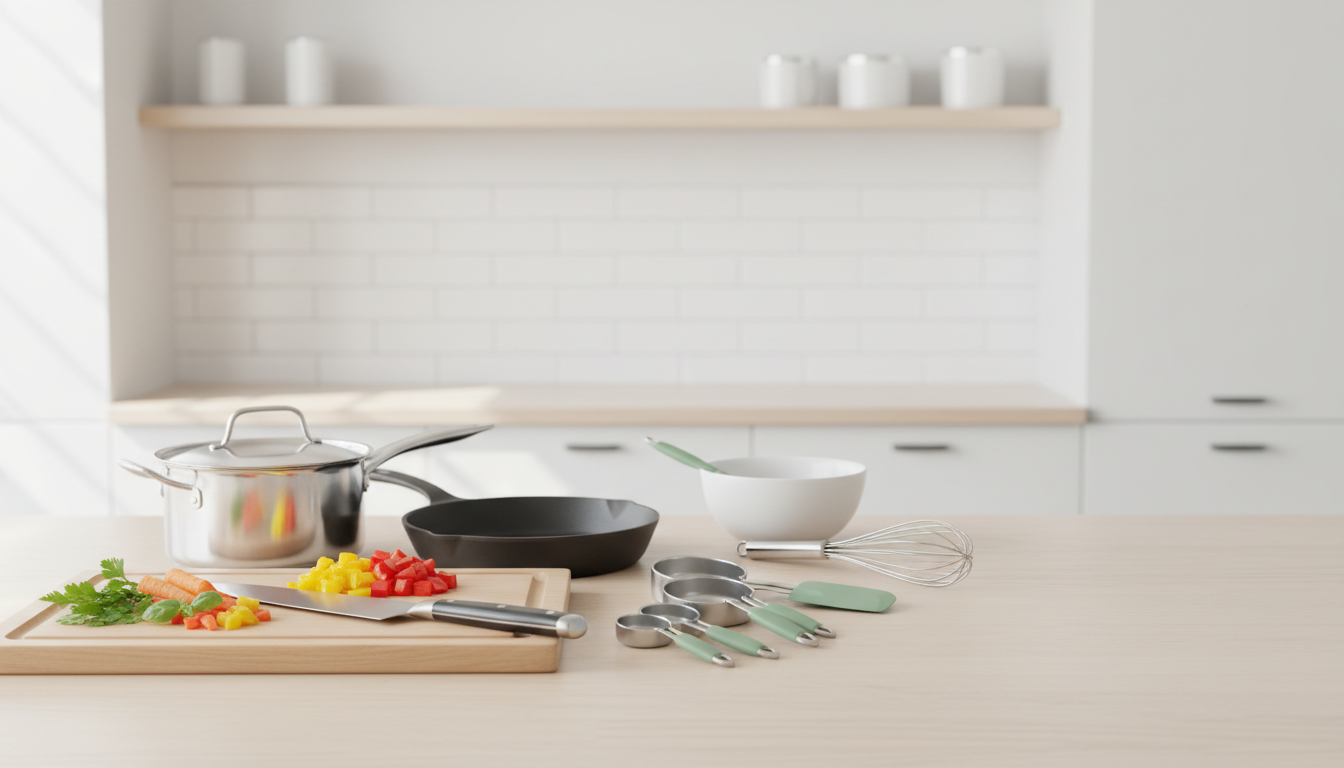
Walk into any kitchen store, and you'll face an overwhelming wall of gadgets and "essential" tools that promise to revolutionize your cooking. Knife sets with 15 pieces you'll never touch. Unitasker gadgets that do one thing poorly. Expensive equipment that will ultimately just gather dust in your cabinets.
Here's the truth: you don't need a $200 knife set or a drawer full of specialized tools to make great food at home. You need a small collection of versatile, quality tools that you'll actually use.
This post cuts through the noise and shows you the actual essentials that will carry you through 90% of home cooking. We're talking about the foundation - the tools that will work together to make cooking approachable, not intimidating.
The Core Philosophy
Better to have seven tools you know ho to use well than fifty taking up space in drawers. These tools work as a system. Your knife needs a cutting board. Your skillet needs a spatula. They're designed to complement each other, not compete for cabinet space. You can alway sadd specialized tools later as your cooking evolves and you discover what you actually need. These create your foundation - the toolkit that makes the "Prep" part of "Plan Prep Plate" feel manageable instead of overwhelming.
When prep is easier, planning becomes inviting, and cooking becomes something you look forward to rather than dread.
The Essential 7
A good Chef's Knife (8-inch)
This is your workhorse. An 18-inch chef's knife handles vegetables, proteins, herbs, and just about everything you'll chop, slice, or dice.
What to look for: a comfortable grip that feels balanced in your hand. It doesn't need to be expensive. A solid knife in the $30-50 range will serve you well for years. The key is that it feels good when you hold it and isn't so heavy it tires out your hand.
Here's what most beginners don't realize: this one knife replaces an entire knife block. You don't need a bread knife, a paring knife, a boning knife, and twelve steak knives to start cooking. You only need one good chef's knife. One critical note: keep it sharp. Dull knives are actually more dangerous because they require more pressure and are more likely to slip. A sharp knife does the work for you. While you can get it sharpened professionally, it's a lot more convenient and less expensive in the long run to buy a knife sharpening tool along with the knife. A multi-stage manual sharpener is going to be the least expensive option with the shortest learning curve, with some as low as $15.
Cutting Board
Your knife needs a partner, and that's a good cutting board. Material matters: wood is the way to go. Plastic in some respects, but you're going to end up adding a lot of microplastics to your food if you go that route. Definitely avoid glass or ceramic, though, they're hard on your knife edge and noisy. Size matters more than you think. Get something bigger than seems necessary - at least 12 x 18 inches. When you're chopping an onion, mincing garlic, and dicing peppers for the same recipe, you'll need space to organize your prep. You might even want to consider getting a set of 3 or 4. I like to chop herbs on the smallest one, vegetables on the medium one, and meat on the large one. This is especially good to avoid cross-contamination without having to wash boards in the middle of a recipe. Stability hack: put a damp kitchen towel underneath your cutting board to prevent slipping and make your prep safer and more confident.
A 10-12 Inch Skillet
This is your absolute workhorse pan. If you could only have one pan, this would be it. A good skillet handles sauteing vegetables, pan-frying proteins, one-pan pasta dishes, stir-fries, frittatas, etc. This pan makes breakfast, lunch, and dinner.
Material options: Nonstick can be tempting, but virtually every material used for non-stick has been proven to be carcinogenic. Even the "ceramic" ones that claim to be PFAS-free. So, I recommend sticking with stainless steel. It's durable and develops great fond (those flavorful brown bits). Bonus feature to look for: oven-safe handle. This lets you start something on the stovetop and finish it in the oven, which is surprisingly useful.
Medium Pot (3-4 Quart) with Lid
This pot handles pasta, rice, soups, stews, boiling vegetables, making sauces - anything that needs liquid and heat. The 3-4 quart size is the sweet spot. It's big enough to make a pot of soup or boil pasta for four, but not so massive that it's awkward to handle or store. If you're cooking for one, you can still use it without feeling like you're cooking in a swimming pool. The lid is non-negotiable. You'll use it constantly - to bring water to a boil faster, to simmer rice, to keep soup warm, etc. Material: stainless steel or enamel-coated cast iron both work beautifully and last forever.
Mixing Bowls (set of 2-3)
Get a nested set with one small, one medium, and one large bowl. Yes, mixing bowls seem boring, but you'll use them constantly, and not only for mixing. They're great for prep (holding your chopped vegetables), marinating (chicken in the fridge), serving, and storing leftovers. Nested sets ssave precious cabinet space, which matters if you're in a small kitchen. Glass or stainless steel work great. Glass can go in the microwave, but stainless is lighter and won't break if dropped. Pick whichever fits your needs.
Wooden Spoon and Flexible Spatula
These two utensils handle about 95% of all cooking motions.
Wooden spoon: won't scratch your nonstick (if you choose to go that route), heat-resistant, so it won't melt, perfect for stirring sauces, sauteing vegetables, mixing pasta, and tasting as you go. It's been a kitchen staple for centuries because it just works.
Flexible spatula (the silicone kind): flipping eggs, scraping bowls clean, folding ingredients together, and turning proteins in a pan. The flexibility matters - it gets into corners and under delicate foods. These two eliminate the need for a drawer full of specialized stirrers, flippers, and scrapers - at least for now.
Measuring Cups and Spoons
It's a good idea to get both dry measuring cups and a liquid measuring cup - they're designed differently and measure differently.
Dry measuring cups: the nested metal or plastic cups for flour, sugar, rice, etc. You fill them and level off the top.
Liquid measuring cup: the glass or plastic pitcher with a spout and measurement lines on the side for water, milk, oil, broth, etc.
You could, of course use, the dry measuring cups for both dry and liquid ingredients, but it can be a pain if you need a 1/4 cup of both a dry and a liquid ingredient.
Standard measuring spoons: for everything from a tablespoon of olive oil to a 1/4 teaspoon of cayenne.
Baking requires accuracy and precision, but you can get away with a little variance with everyday cooking with some ingredients. Others, such as salt, you might want to be more consistent so you can learn what "enough salt" actually tastes like and how you can recreate dishes that worked well.
The One Tool That Upgrades Everything
Digital Kitchen Scale
You can absolutely cook without a scale. People have done it for centuries, but if you find yourself cooking regularly, this $20 investment pays for itself in accuracy, consistency, and fewer dirty dishes. Here's why it's a game-changer: Precision without guesswork. Flour measured by weight gives you consistent baking results every time. No more wondering if you packed the measuring cup too tight or not enough. Perfect portions: The recipe calls for 6 ounces of chicken? Just place it on the scale (maybe use some parchment paper first. No more playing "does this look like 6 ounces?" Less cleanup: Weigh ingredients directly into your mixing bowl. One less measuring cup to wash, and when you're doing dishes by hand in a small kitchen, that matters. Recipe scaling made easy: When you're using CookCloud to scale up or down a recipe, weight measurements are far more precise than trying to figure out what 1/2 of 3/4 cup looks like. They're inexpensive ($15-40), take up minimal drawer space, and the benefits become obvious the first time you use one. This is the difference between cooking and cooking confidently. You don't need it on day one when you're still getting comfortable with your knife and skillet, but once you're cooking regularly, you'll wonder how you managed without it.
Nice-to-Haves (But Not Essential Yet)
As you cook more, you'll naturally discover what else might be useful: a vegetable peeler, colander, sheet pan, tongs, whist, etc. Don't feel pressure to buy everything at once. Your cooking style will tell you what you actually need. If you find yourself making a lot of roasted vegetables, you'll realize a sheet pan would be helpful. If you're making salad dressings, a small whisk becomes worth it. Start with the essentials. Add tools as you bump into their absence.
Where to Shop Smart
Restaurant supply stores offer professional-quality tools at surprisingly affordable prices. That's where chefs shop, and you can too. Off-price department stores like TJ Maxx, HomeGoods, and Marshall's regularly stock name-brand kitchen tools at steep discounts. You might find a $60 pan for $25. IKEA's basics are surprisingly solid. Their knives, cutting boards, and utensils punch above their weight class for the price.
What to avoid: expensive "sets" that include tools you won't use. That 15-piece knife block? You'll use two of those knives. Better to buy the one great knife you need. Buy quality where it matters. Your knife and skillet will be in your hands every day, so invest there. Save money on mixing bowls and measuring cups where brand matters less.
Taking Care of Your Tools
Hand wash your good knife. Dishwashers dull the blade and can damage the handle. Keep your cutting board clean and dry between uses. Oil wooden boards occasionally to prevent cracking. Season cast iron if you go that route. These tools last decades with basic care. Maintenance isn't complicated, it's just respecting your investment so it keeps serving you well.
Putting It All Together
These seven tools (plus that eight game-changer when you're ready) create a complete cooking ecosystem. You can make thousands of recipes with just these essentials. Your repertoire is limited by your imagination, not your equipment. As you cook more, you'll naturally discover what else you might want. Maybe you'll fall in love with baking and want a stand mixer. Maybe you'll make a lot of smoothies and want a blender. Add tools as your interests develop. Confidence comes from mastering the basics, not owning everything. The goal is tools that empower you to cook, not intimidate you into ordering takeout. The best kitchen is one you actually use.
Ready to Put These Tools to Work?
Now that you know what tools you'll need, the next step is learning how to use them with confidence.
In my free Cooking Fundamentals email series, I break down exactly how to use each of these tools, from proper knife technique that makes prep faster and safer, to getting the perfect sear in your skillet, to understanding when to use your pot versus your pan.
You'll also get instant access to my Kitchen Essentials Checklist PDF - a printable guide you can take shopping or hang in your kitchen. It includes the complete tools list, pantry staples to keep on hand, and a quick reference guide to common recipe terms that trip up beginners.
No more kitchen overwhelm. Just clear, simple guidance that gets you cooking.
And when you're ready to put these tools to work with actual meals, CookCloud helps you plan a week of cooking that matches your skill level and the equipment you have. Because having the right tools is just the beginning - knowing what to make with them is where the real confidence comes from!
Ready to stop wondering what's for dinner?
Related Posts
Your 30-Day Meal Planning Transformation Starts Here
This guide will show you how healthy meal planning can revolutionize your relationship with food, without turning you into a …
Meal Planning for Beginners: A Complete Step-by-Step Guide to Save Time and Money
With the right system in place, you can transform your relationship with food and cooking in just one week.
Mediterranean Diet Meal Planning Guide: 7-Day Plan for Beginners
This mediterranean diet meal planning guide provides a structured 7-day framework that removes the guesswork and helps you build sustainable …
What to Make for Dinner Tonight: 15 Easy Last-Minute Meal Ideas
With the right framework and a collection of flexible meal ideas, you can confidently answer what to make for dinner …